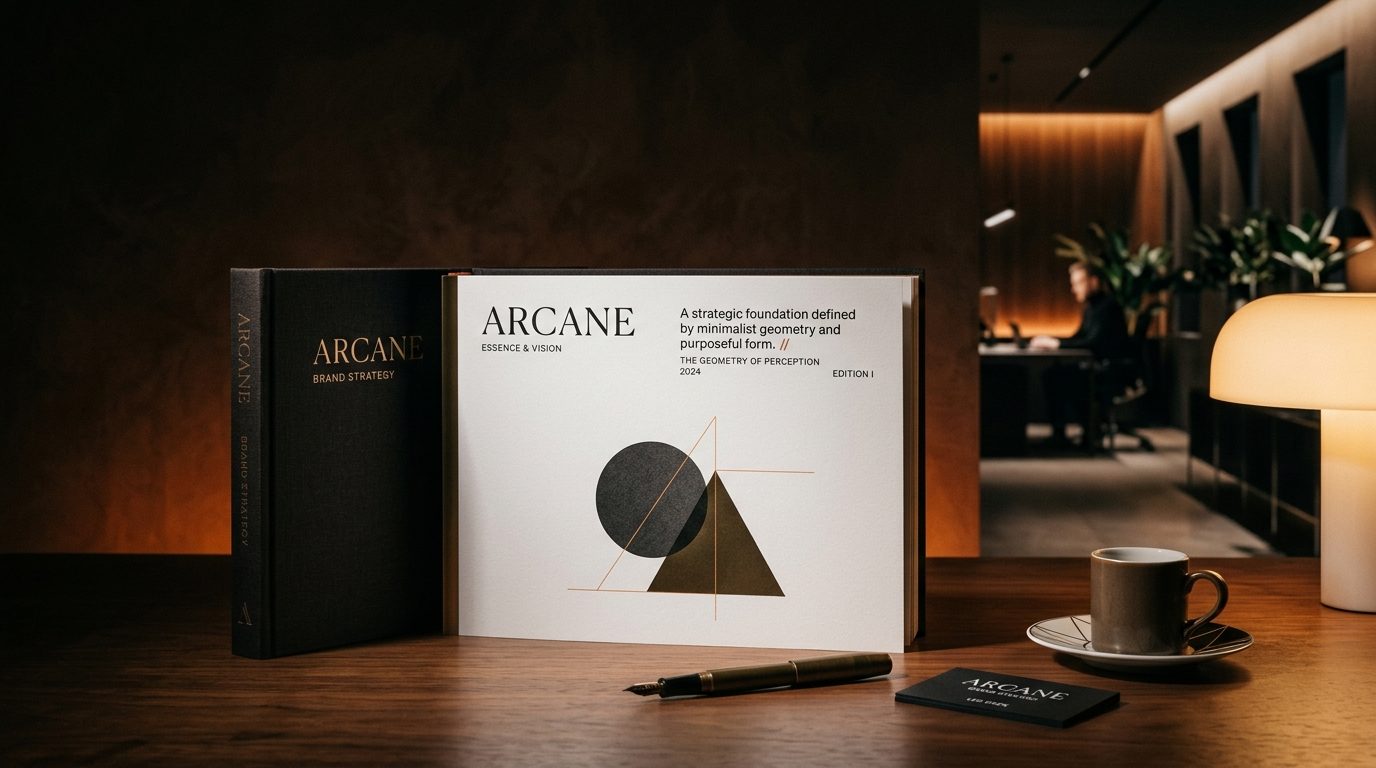
In an era saturated with infinite design templates, AI-generated moodboards, and repetitive visual languages, the safest decision a company can make is often its most fatal: looking just like everyone else.
The Illusion of Safety in Templates
Every week, hundreds of promising companies launch with clean typography, minimalist layouts, and curated pastel palettes. On paper, they look modern. They check every aesthetic box established by Silicon Valley tech startups or Scandinavian lifestyle brands over the past decade.
Yet, despite substantial marketing investment, they struggle to retain recall. When asked what makes them unique, consumers can rarely articulate a distinct identity. Why? Because safety in branding is an illusion. When you borrow another brand’s visual vocabulary, you inadvertently borrow their baggage while surrendering your own story.
Core Insight: The Uniformity Paradox
When everyone accesses the same stock assets, standard templates, and trending color schemes, adherence to "best practices" transforms distinct businesses into interchangeable commodities.
- Recall Decay: Generic visuals are forgotten within 48 hours of interaction.
- Margin Erosion: Commoditized brands compete on price; distinct brands command premium pricing.
- Emotional Disconnect: Consumers bond with conviction and nuance, not sterile conformity.
The Commodity Trap: Why Conformity Costs More Than Risk
Business leaders often gravitate toward familiar branding because it feels proven. It lowers perceived launch friction and eliminates stakeholder anxiety. However, this familiarity creates an invisible barrier called Strategic Invisibility.
If your audience cannot differentiate your advertising from your competitor's within the first 1.2 seconds of scrolling through an Instagram feed or billboard display, your acquisition cost immediately doubles. You are essentially paying ad spend to educate the consumer on a category, rather than establishing your proprietary value.
“Creativity is not an ornamental luxury for mature corporations; it is the fundamental engine that allows bold brands to survive in crowded markets.”
— Bisan Brand Strategy Framework
The 4 Pillars of Original Market Authority
Building authentic brand authority requires moving beyond decorative design into foundational identity systems. At Bisan, we structure proprietary brand architecture around four immutable pillars:
Uncompromising Point of View
Great brands have clear enemies and sharp values. They know exactly who they are built for—and just as importantly, who they are not.
Signature Visual DNA
Bespoke typography, purposeful color geometry, and tailored grid systems that are unmistakably recognizable even without a logo.
Dynamic Kinetic Motion
Static identity is obsolete. Modern brand languages are living organisms defined by how they move, transition, and interact in motion.
Emotional Continuity
From high-profile event activations to micro-copy on a mobile checkout button, every touchpoint reinforces the same core feeling.
The Competitive Edge of Originality
When you choose bespoke identity over template culture, you shift from chasing market trends to establishing market standards. You no longer compete in a race to the bottom of algorithmic feeds; you build a fortress of genuine customer loyalty and undeniable market value.
The brands that endure are never the ones that played it safe. They are the ones that had the audacity to be unmistakably themselves.